Nature
-
-
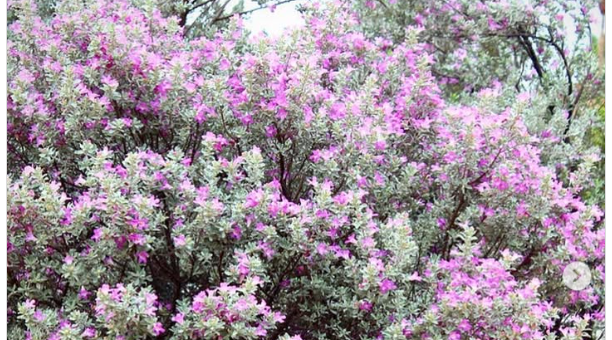
I was out cleaning and filling up the bird baths and deer bucket earlier this morning and saw my purple sages in the back lots in full bloom after the rains. But I am not walking through hip high grasss to get a picture. An evergreen native to West Texas, South Texas, and the Edwards Plateau, Texas sage has small silvery-gray-to-green leaves and a loose form, unless it’s trimmed into a hedge. With this mild appearance, it usually blends into the surrounding landscape. But from time to time, the plant erupts with vibrant purple flowers, a color riot that many believe heralds rain. After months of brutal heat and cloudless skies, the blooming of the “barometer bush” can be a joyous occasion. There are no scientific studies on how rainfall affects Leucophyllum frutescens’s blooming patterns, so no one can say for sure. Several experts say the plant’s blooming is triggered by high humidity or low atmospheric pressure. Though it does occasionally bloom ahead of rainfall—seemingly in anticipation of precipitation—more often it flowers after a shower.
They look like this:
-
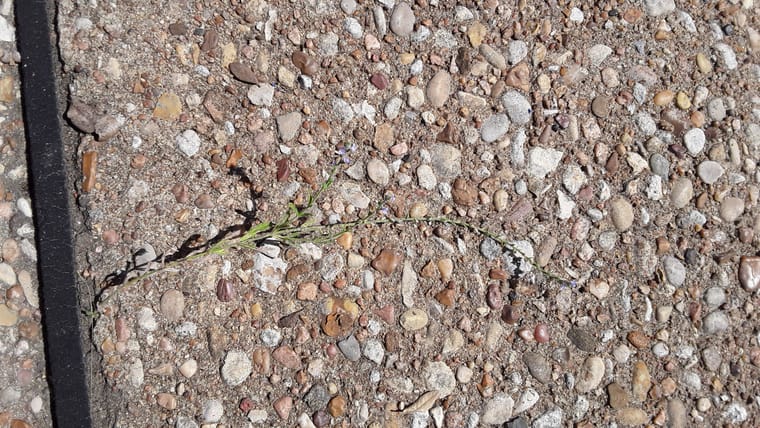
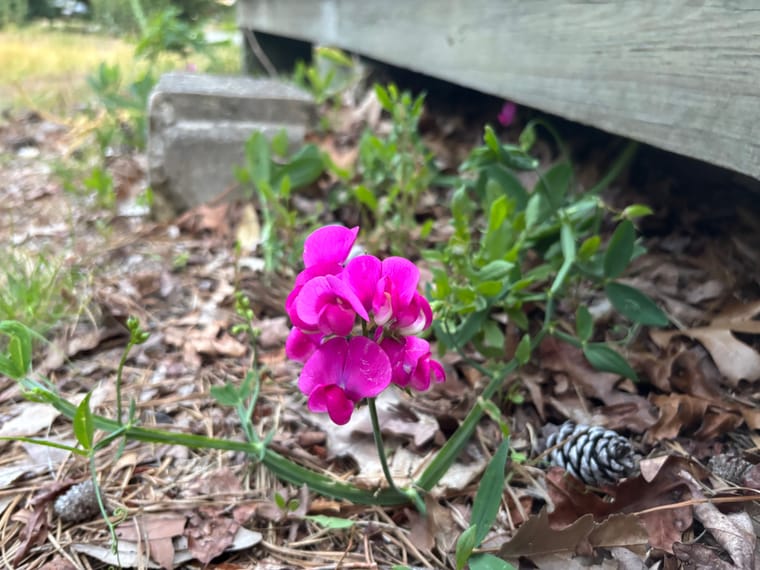
Wild sweetpeas dont look like much but their flowers are gorgeous
-
All I can say is, this was such a great time in our lives to have seen Frank become BIFM! Have a great day! This should bring a smile or two to your faces. Beauty in motion!
https://x.com/RoyalsPlsWin/status/2080826169486676169/video/1 -
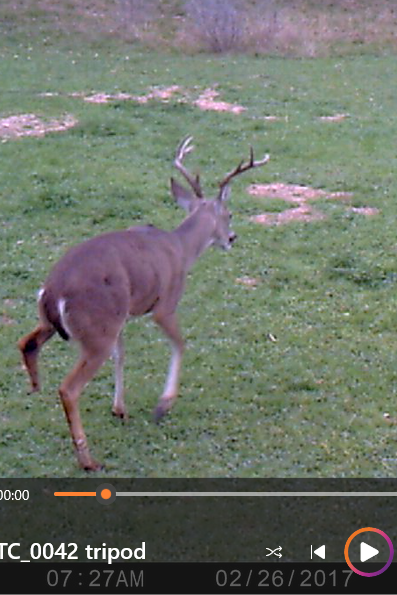
I wanted to post a video of a deer we had that Mike called Tripod for obvious reasons. Mike found the lower bone to his missing leg out back one day when he was searching for an arrow in the grass. He lived for a couple of more years and then we never saw him again. (I found Mike's videos he took of wildlife, his stealth cam pictures and the girls and I have been reliving some of our highlights from the past 30 years). Video is too big and I don't know how to make it smaller, so will go with this freeze frame.
-
@RockChalkinTexas-0 what a badass.
-
@rockchalkintexas-0 one way would be to post video to youtube and then link to it. Not ideal, of course.
-
@approxinfinity I tried to email to you and it said it was too big there too. I didn't want anyone thinking I made it up.
-
@rockchalkintexas-0 we dont need the people that think that anyway

-
DINOSAURS PROBABLY DINED UPON A VARIETY OF FRUITS AND SEEDSs.
Found this fascinating. This is from The KU Alumni monthly newsletter.LAWRENCE — Dinosaurs likely munched on a lot more fruit than previously imagined.
Recent research appearing in the journal Science overturns a long-held idea that flowering plants didn’t evolve large fruits and seeds until after the mass extinction of dinosaurs about 66 million years ago, when Earth was smacked by a giant asteroid.
Co-author James Saulsbury, postdoctoral researcher in the Biodiversity Institute and Natural History Museum at the University of Kansas, said the study changes how scientists think about plant-animal interactions and their role in plant evolution.
“This paper focuses on a fossil forest in New Mexico and the preserved fruits, seeds and other reproductive structures of the plants that lived there,” he said. “These fossils change how we understand the way flowering plants became modern in terms of their reproductive ecology.”
According to Saulsbury, paleobotanists generally had believed that flowering plants, which first appeared roughly 136 million years ago, only evolved modern reproductive strategies after the extinction event that wiped out the dinosaurs at the close of the Cretaceous.
“For much of their early history, they were relatively small, weedy plants that did not dominate forest canopies,” Saulsbury said. “Although they gradually diversified and occupied more ecological niches, it was thought their seeds and dispersal structures remained small and were primarily dispersed by wind or without fleshy fruit.”
The KU researcher said these early seeds and small fruits would have been similar in size to anything from dust particles to poppy seeds at their biggest. Modern flowering plants, by contrast, use a much wider variety of dispersal strategies. Many produce large, fleshy fruits that entice animals to spread their seeds. Think apples, pears, avocados, olives, and coconuts.
“The prevailing view has been that this more diverse reproductive ecology emerged only after the end-Cretaceous extinction,” Saulsbury said. “Our study suggests that transition began much earlier. The largest fruits in our fossil flora are about the size of a grape. That may not sound especially large today, but it is remarkably large for flowering plants of that period.”
The findings were drawn from an important field site near Truth or Consequences, New Mexico, where the study’s authors, including Saulsbury, performed fieldwork over many years.
“The New Mexico fossil site is exceptional,” he said. “My co-authors have referred to it as a ‘botanical Pompeii’ because of its remarkable preservation. The site contains a layer of volcanic ash preserved as rock, known as tuff, that stretches for more than a kilometer. The deposits formed at essentially the same time, preserving many plants where they lived and died. It provides a snapshot of a forest from about 74 million years ago and even preserves aspects of its spatial arrangement.”
The site is also special because of the diversity and size of its fossil fruits and seeds, according to Saulsbury.
“However, we don’t believe these findings are simply the result of preservation bias,” he said. “It appears to represent a genuinely unusual forest.”
According to Saulsbury, fruit size matters because size is associated with so many aspects of forest ecology.
“Large fruits tend to occur in moist environments with densely packed forests,” he said. “Our findings indicate that modern-looking forest structure and reproductive ecology were developing earlier than previously believed. The diversification of flowering plant reproductive strategies did not have to wait until after the end-of-Cretaceous extinction.”
The new research challenges one longstanding idea that large fruits evolved alongside the rapid diversification of mammals only after the asteroid impact eliminated the dinosaurs.
“As mammals expanded into newly available ecological niches, flowering plants were thought to have diversified their seed dispersal strategies in response,” the KU researcher said. “Our findings suggest that story began earlier. If diverse, large fruits already existed in Cretaceous forests, they were likely being dispersed not only by early mammals but also by large dinosaurs and other animals.”
Saulsbury participated in fieldwork, collected fossils and carried out much of the initial classification, measurement and analysis of the fossils.
“We sorted hundreds of fossil seeds into what we call morphotypes,” he said. “These are groupings based on form rather than confirmed species because it is often impossible to determine whether similar-looking fossils represent one species or several.”
Saulsbury's co-authors were lead author Jaemin Lee of the University of California, Berkeley; Dori Contreras of the Perot Museum of Nature and Science; Garland Upchurch of the University of Colorado Museum of Natural History and Cindy Looy of the University of California, Berkeley.
-
Some sweets for my sweethearts!

-
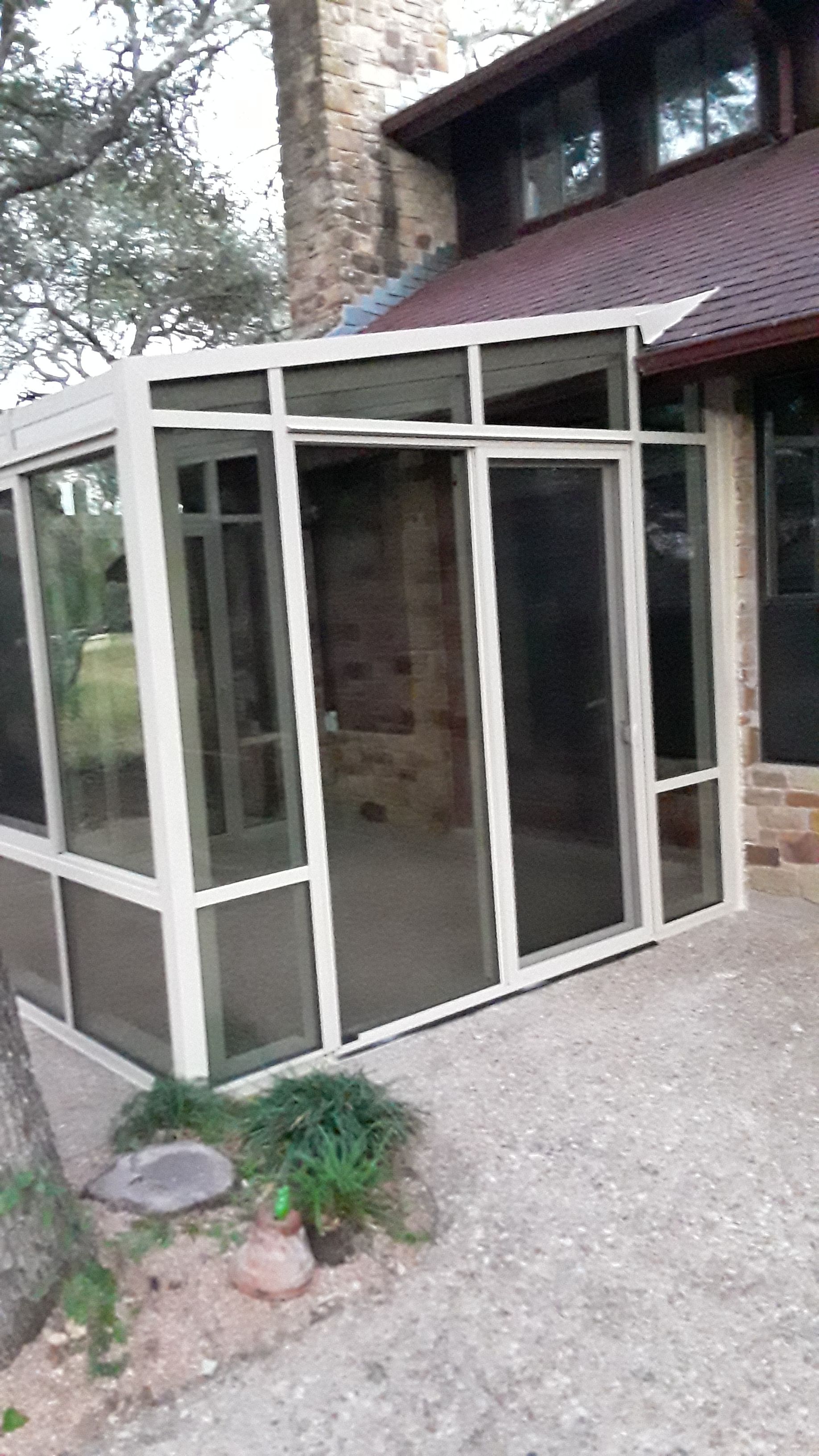
Here's a picture of the solarium I had added on to the back of the house. Keeps me out of the bugs and can watch wildlife without them seeing me.
-
Nice @rockchalkintexas-0 . Are you able to take pictures from inside solarium or is it too tinted?
-
@approxinfinity Too tinted. Birds would be so available too. They flutter around the massive sabal palm that sits right behind it, in and out of the firewood stacks, squirrels chase each other around the base of the tree, can see the flocks of birds in the garden, but mainly it was about getting away from the bugs. We can see the moon through the ceiling but not much else. We go out on my upper deck to gaze at the moon and stars. Perseid meteors coming up can be seen every which way. Mike and I used to lay down and watch them.
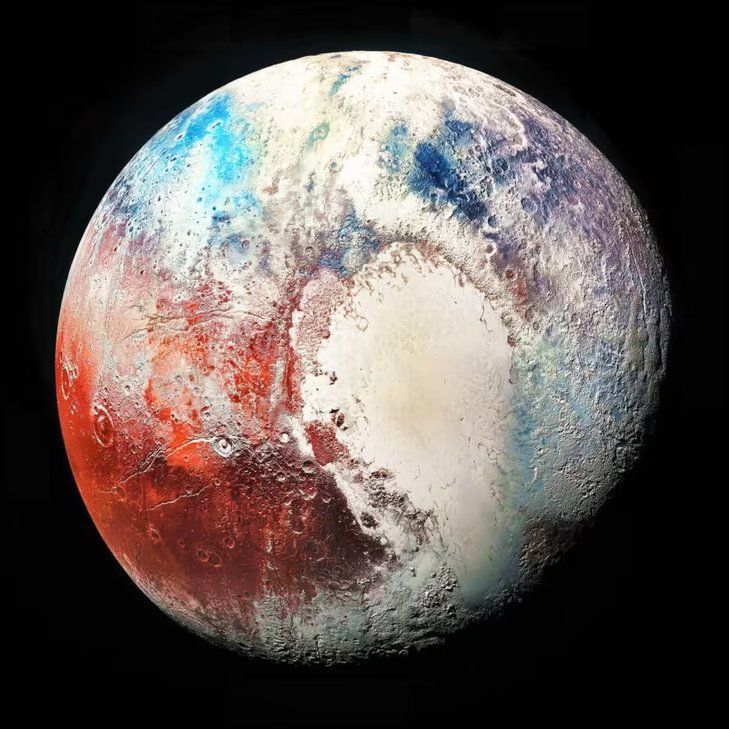
Which brings me to today's photo. I was devastated when they reclassified Pluto 20 years ago. After all, Clyde Tombaugh, a JAYHAWK, discovered it. I have this image of it from Cassini that is my background on my laptop and another older one as my background on my 2012 Nook that still works! Not many undergraduates enter the University of Kansas having already achieved worldwide fame. And, to date, only one has enrolled at KU after discovering a planet. His name was Clyde Tombaugh, a 24-year-old amateur astronomer from Burdett, Kansas, who positively identified Pluto as the ninth planet in our solar system on February 18, 1930. The finding was the culmination of many years of scanning the night skies by numerous astronomers searching for what had been known as “Planet X,” an effort analogous to looking for a golf ball located 33 miles away. Here's a link to a great article about him: https://union.ku.edu/planetary-man
-
Lindley Hall is getting a major renovation. The Tombaugh Observatory sits atop the roof and I hope they will keep that (and maybe update it as well). I used to go there as a kid and it fueled my in interest in space and astronomy.
I entered KU in 1983 with a dream of pursuing Astrophysics but detoured after Calc 1&2 kicked my ass. (My rural Kansas public school education did not prepare me well in Math.)
But, more to the topic: I was not at all surprised when Pluto was re-categorized as a dwarf planet — and not disappointed.
As a kid, I thought its eccentric orbit (it crosses paths with Neptune and is occasionally closer to Sun than Neptune) and irregular elliptical suggested that it was exogenous to our solar system. Astronomers didn't have any good explanations for these irregularities, and I felt it was most easily explained by a scenario where our sun drifted close enough to another star to pull a distant satellite away.
So, even though Pluto doesn't have planetary status, I think it should be recognized as unique gift to our solar system.
Rock Chalk!
-
@bskeet That was my building as a geography major. Enjoyed my time there greatly. Math forced me to abandon my plans to become a cartographer!
-
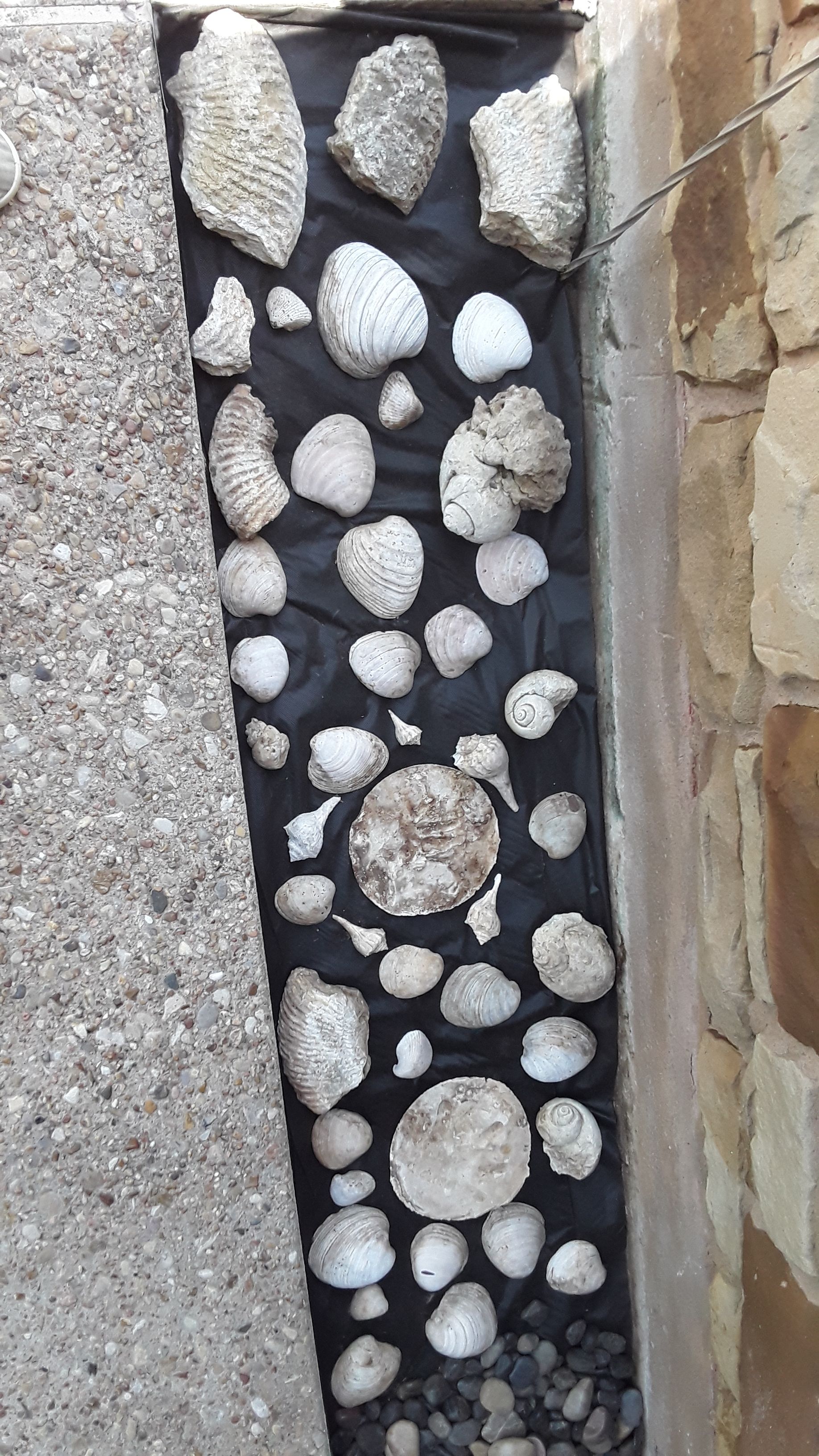
I spent the morning cleaning up my fossils and shells from the coast.
-
@wonderofscience
Curiosity Rover spotted on the surface of Mars by the orbiting MRO spacecraft.
 : NASA/JPL/UoA
https://x.com/wonderofscience/status/2084287182911533426/video/1 -
@RockChalkinTexas-0 It's the Gulf of America! Be proud that it is.
-
@bskeet I watched a Nova called Pluto and Beyond and gained a new respect for the planet because even though it is now a dwarf planet, it actually grew to be King of the Kuiper Belt.
JOHN SPENCER: When we launched the New Horizon spacecraft back in 2006, we knew we wanted to fly to an object beyond Pluto, but we didn’t have a particular object that we knew we could reach with our spacecraft. So we started doing deep searches of the sky beyond Pluto.
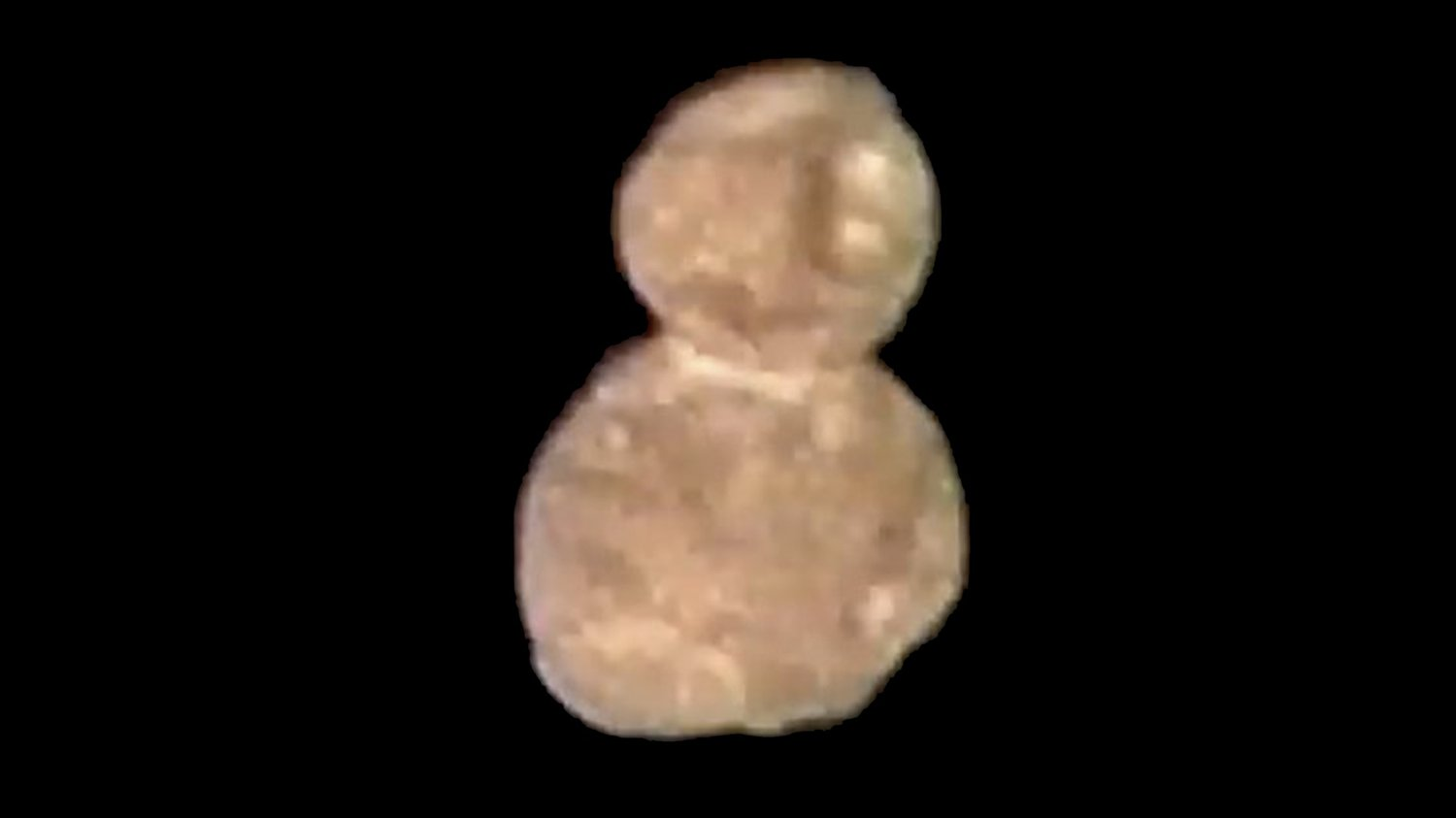
MARC BUIE: One is, you have two circular objects that are close to each other, but they are orbiting each other, or it could be just some lumpy potato-shaped thing. And then the third is what we call a “contact binary,” two balls stuck together. And we think it could happen for Kuiper Belt objects. We don’t know, we’ve never seen one of these things before.NARRATOR: But when New Horizons finally brings Ultima Thule into focus, the results could be profound. This elusive object could revolutionize our understanding of how the planets in our solar system formed.
ALAN STERN: Ten, nine, eight,...NARRATOR: January 1st, 2019, 12:33 a.m.:
ALAN STERN: …one. Go New Horizons!
NARRATOR: As the world rings in the new year, the New Horizons team celebrates the moment of the spacecraft’s closest approach to Ultima Thule. But it will be hours before anyone knows if the flyby is successful.
JOEL PARKER: Ultima Thule is so far away that it takes six hours to send a signal from the spacecraft to Earth.
ALICE BOWMAN: We have a healthy spacecraft. We’ve just accomplished the most distant flyby of our solar system.CROWD CHEERING
NARRATOR: That night, the first close up image of this distant object comes in.
JOHN SPENCER: Well, what we saw today blows out of the water anything we’ve seen. The first image was two or three pixels across. Yesterday, you could see, kind of, two lobes. And today’s image, we see it for what it really is: basically, two spheres stuck together, like this really is two things that formed as two different objects.
THIS IS WHAT THEY SAW!