Nature
-
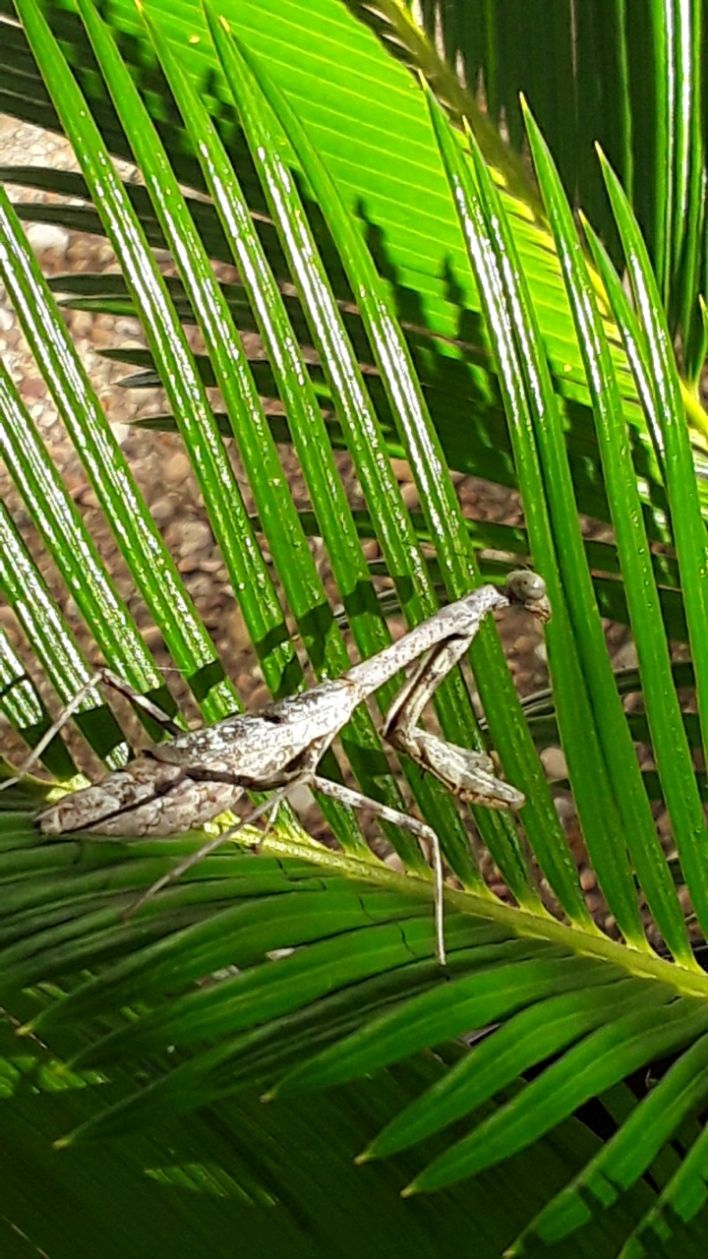
Nice use of frisky. Don’t see that word enough.
-
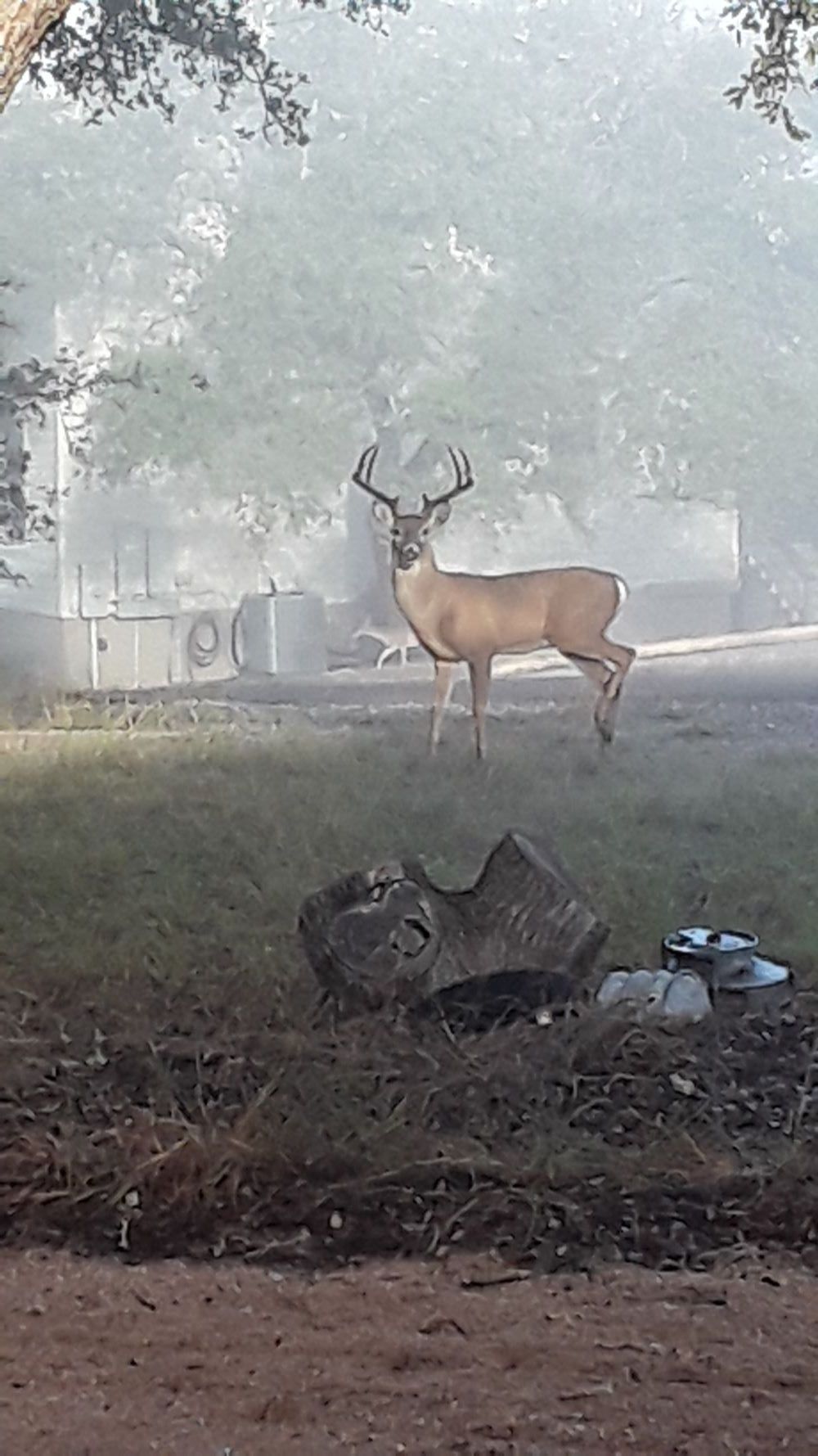
Today's photo is of a "big" buck for our area. He is one of a long line of bucks that have ruled out here. Mike had a favorite that he just couldn't bow hunt and called him Broken Horns because one of his Surroyal Tines (which is the fourth branch on a separate tine of a deer’s antler) was so noticeable. His heirs also carried this trait. We've seen the bucks during rut. They will come for drinks out of the bucket during the night because you can see their poop around the area, especially in 100 degree weather, but other than that they are mostly hidden throughout the rest of the year. Our does are pretty fat right now and you can always tell when one is going to have twins. We saw twin bucks a couple of years back because of their button antlers when in velvet. We spotted them again last year. I tried resizing.
-
@RockChalkinTexas-0 wow that’s a beaut!
-
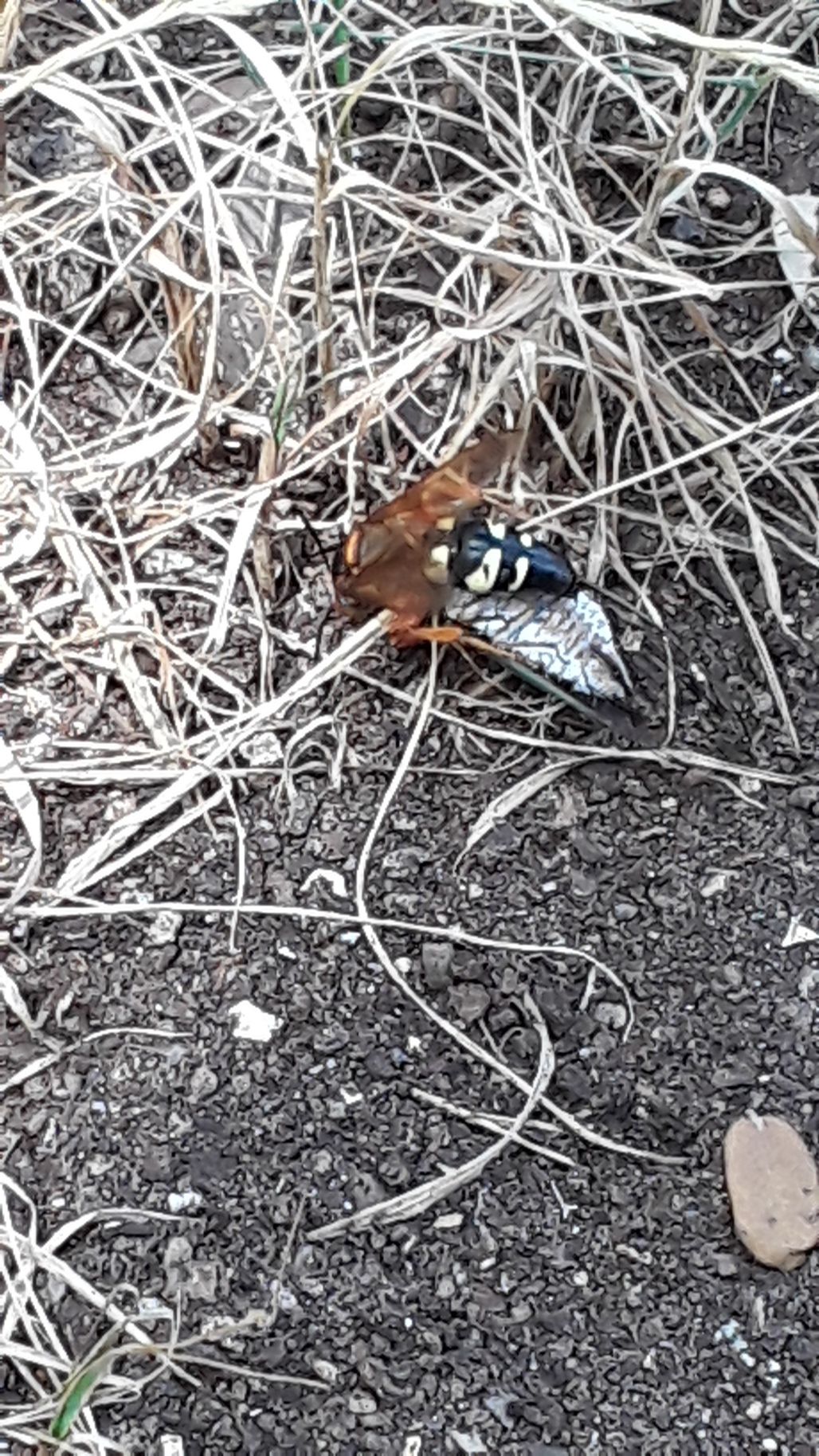
Today's photo is of a Cicada Killer Wasp, who likes sandy ground. I saw where his hole entrance was a couple of years ago after I had laid down small pebbles. They live solitary lives. One morning while watering plants, this happened!!! He was trying to get him underground. I see such carnage! OH MY (in Dick Enberg style)!!!!! They are a check on the cicada population, and in turn, may directly benefit the deciduous trees upon which the cicada's feed. We don't have them thick around here, not like you see where dormant ones who all appear at the same time. The noise would drive me crazy.
-
Just discovered this awesome thread of pictures. Although I'm not much on flowers and bugs, I get fascinated by my location along lake Michigan. I'll try to upload a few of my favs if I can figure it out.
-
@RockChalkinTexas-0 great picture. I remember cicada killers growing up in Topeka. I always wondered what it would feel like to get stung by one. Never did find out.
-
@HoraceZontal Cicada Killers sounds like the name of a rock band.
-
Another casualty yesterday. Girls saw Hattie snag one of the lizards.

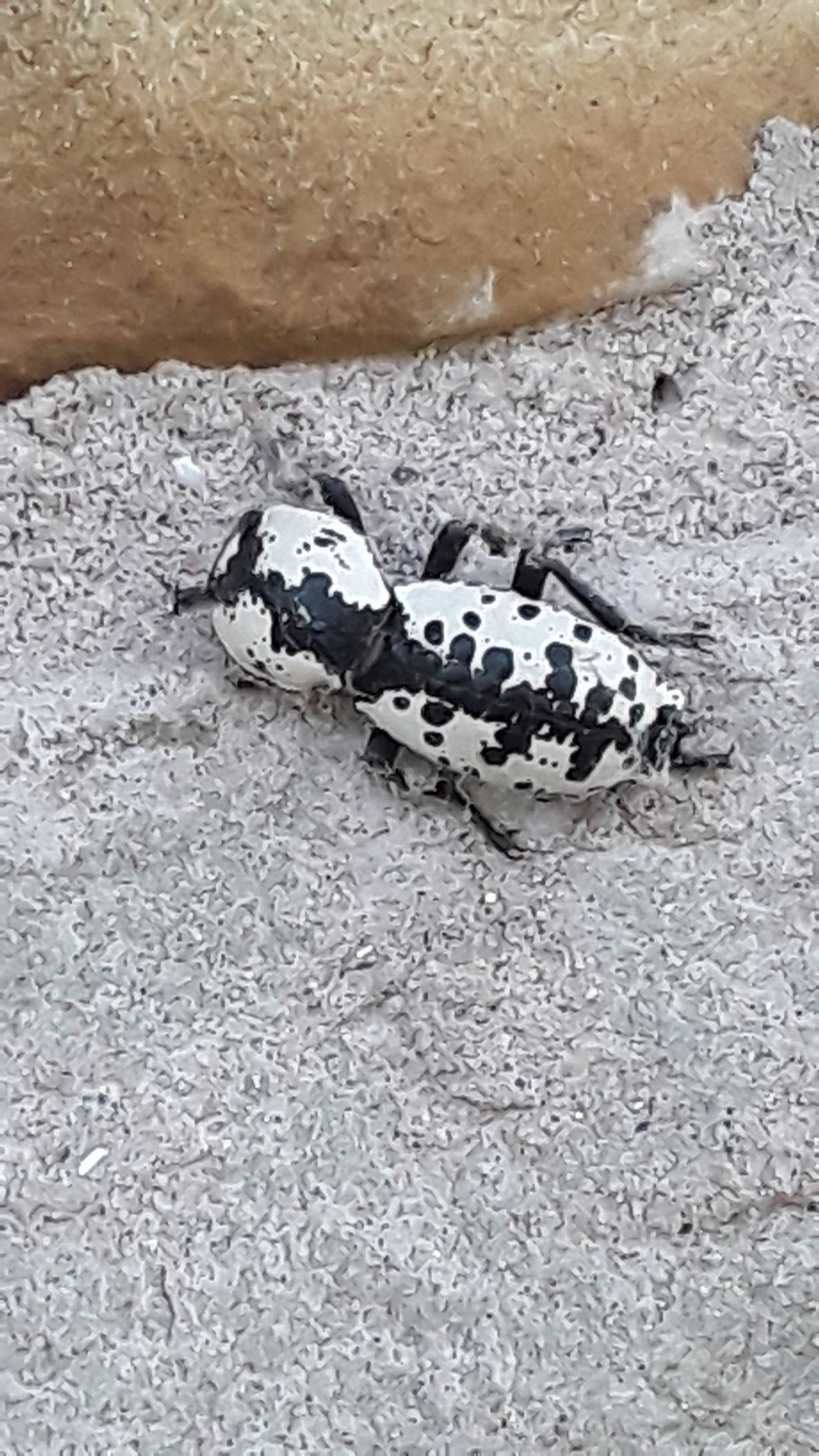
Today's photo is of an Ironclad Beetle. They are found in the central portion of Texas and south into Mexico; not known to damage live plants and is medically harmless. True ironclad beetle species occur in California. The striking adult beetle is 5/8 to 1 3/16 inch long and the body is adorned by a black and creamy white blotchy color pattern. Its exoskeleton (integument) is extremely hard. Other species of the genus Zopherus, which contains 19 species, are known from western Texas. This beetle family (Zopheridae) is closely related to Tenebrionidae. Adult beetles are thought to feed on lichens growing on trunks of trees. This beetle can be found clinging onto the trunks of trees or outer walls of homes in wooded areas. They are extremely difficult to kill in a killing jar and several hours may be needed for success.

-
said in Nature:
Just discovered this awesome thread of pictures. Although I'm not much on flowers and bugs, I get fascinated by my location along lake Michigan. I'll try to upload a few of my favs if I can figure it out.
When I try to upload my pictures it says too large. Trying to figure out how to make them smaller.
-
@wissox83 me too. I tried to bump the max size in config. Is it still failing?
-
@approxinfinity Rookies!!!!
-
This post is deleted! -
@RockChalkinTexas-0 ummm thats a moth!
-
Let me know if you can upload big pics now @wissox83
-
@approxinfinity I thought it was too but he swore it was a wolf spider.
-
Trying large size video of my hummingbirds. It worked!
-
Nice!
-
-
@rockchalkintexas-0 if you put an exclamation mark before the link it embeds in the convo ^
-
Errr. It should. Thought it worked for a sec